Trail Maintenance: funding from the Schwemm Family Foundation helps combine ecological integrity with public access
Trails are an amazing way to facilitate public access to otherwise unreachable areas of our properties. We hope that this physical connection with the land allows people to recreate, find respite, and prompts a vested interest in the land we care for and protect.
But, trails come at a price, both economically and ecologically. Invasive species, the number one threat to biodiversity behind habitat loss, thrive in disturbed soil. A trail is essentially a disturbed soil highway that meanders and weaves its way through our preserves. This means that trails are predisposed to higher concentrations of invasive plants, and leaving these populations of invasive plants unchecked risks further spread out into the wildlands that surround the trails. The long term goal is to treat invasive species on the sides of trails while allowing native plants to come up and take their place, boosting ecological integrity and lowering long trail maintenance costs. Therefore, knowing what you are trimming and avoiding native plants is essential for proper trail maintenance. From a public access perspective, these invasive plants grow thick and fast and dramatically narrow the accessible corridor for visitors, creating safety conflicts between user groups like bicyclists and pedestrians. Keeping these invasive species at bay, through line trimming and hand pulling, requires timely action to keep them from going to seed and exacerbating the issue. With over 25 miles of publicly accessible roads and trails across all of our preserves, treating all of these trail corridors is a significant financial investment for VLT. Thanks to funding from Schwemm Family Foundation, VLT has improved both ecological integrity and public safety at Harmon Canyon Preserve by managing a 3.7‑mile trail corridor, treating 4.8 acres of contiguous habitat.
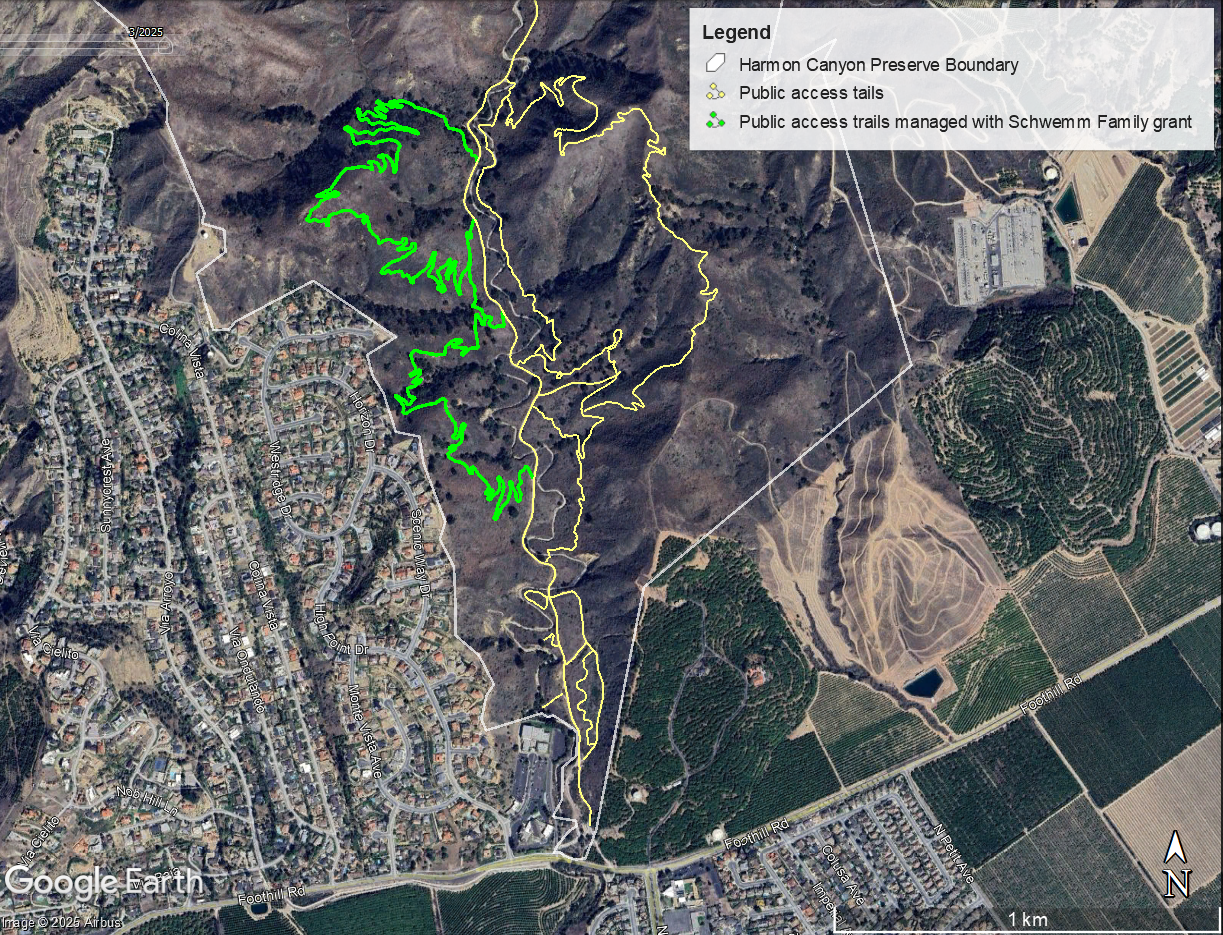
Invasive plant maintenance in the area funded by the Schwemm Family Foundation primarily targeted annual grass (Bromus spp.), black mustard (Brassica nigra), shortpod mustard (Hirschfeldia incana), milk thistle (Silybum marinum), and tocalote (Centaurea melitensis). Plants were mechanically trimmed when monotypic (only invasive plants), and carefully hand pulled around native seedlings. Using these methods we observed an improvement of native biodiversity with increased cover of California sagebrush (Artemisia californica), giant wild rye (Elymus condensatus), California brittlebush (Encelia californica), foothill needlegrass (Stipa lepida), purple sage (Salvia leucophylla), and deerweed (Acmispon glaber) throughout the project area.
(Before)
(After)
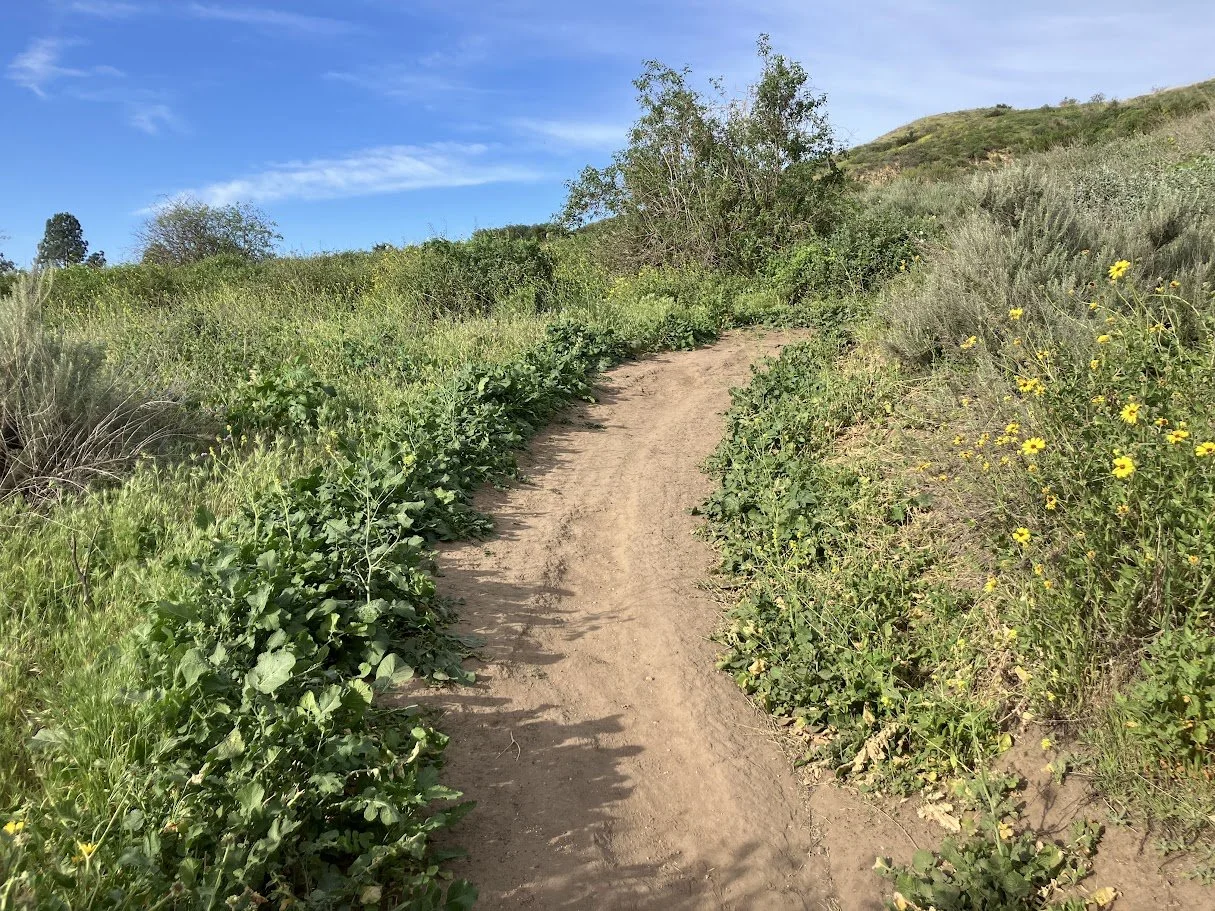
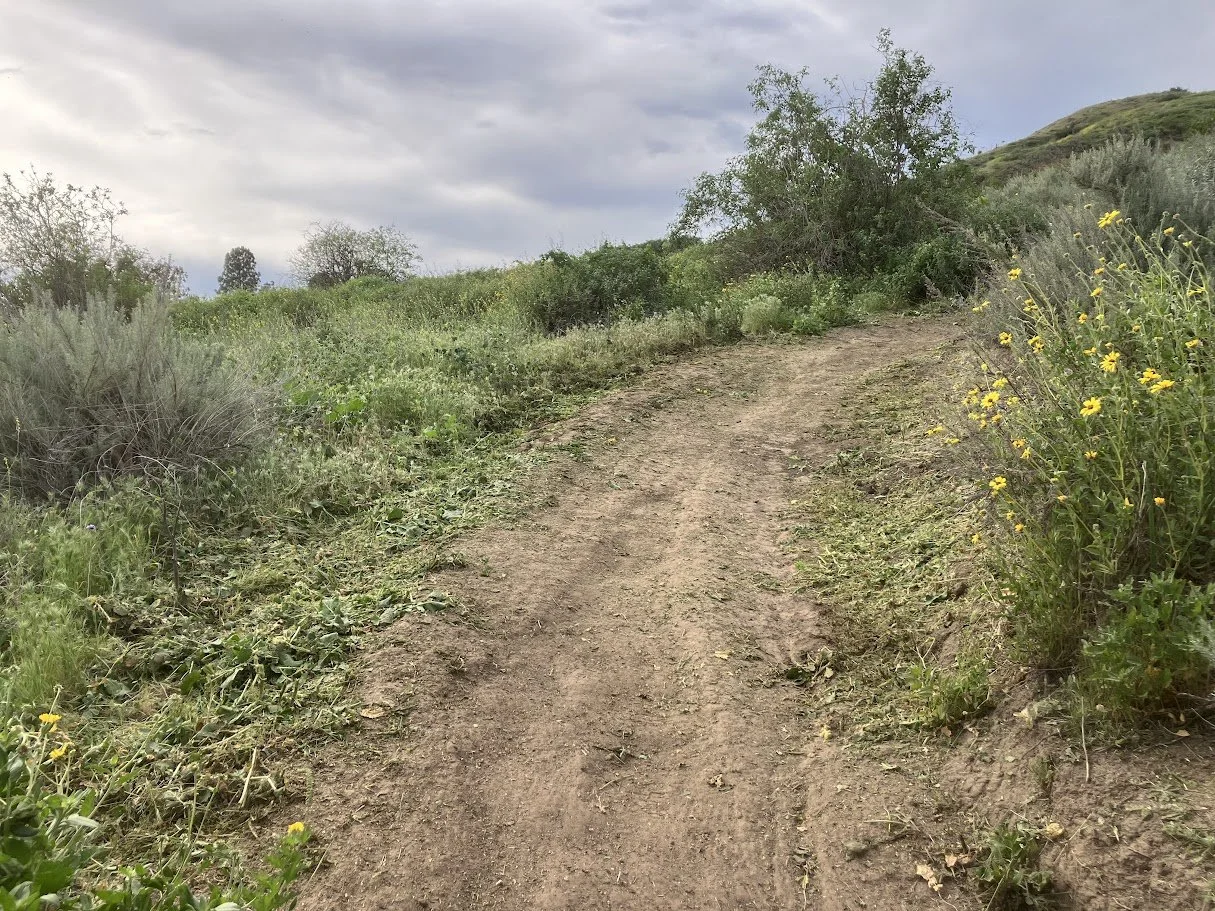
Above you can see some before and after work done in the project area. Native plants like California brittlebush and California sagebrush were carefully weeded around and invasive herbaceous plants were line trimmed. With continued careful treatment, the area line trimmed above will slowly fill in with native species, reducing staff maintenance on the trails and increasing habitat value of the area.
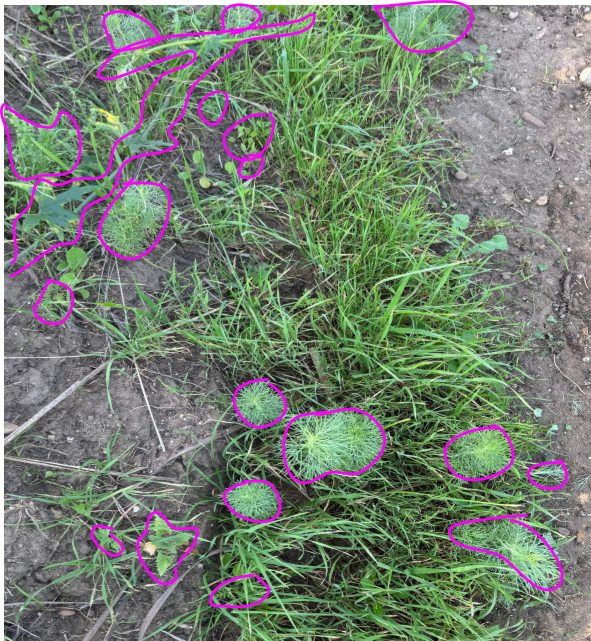
Above is an example of early season growth along Morris Trail with young recruiting native plants circled in pink, in a matrix of invasive thatch. Hiding among the grasses are six native species, including: California sagebrush (Artemisia californica), California goosefoot (Chenopodium californicum), common eucrypta (Eucrypta chrysanthemifolia), succulent lupine (Lupinus succulentus), miners lettuce (Claytonia perfoliata), and climbing bedstraw (Galium porrigens). Unless you know what you are looking for, it is easy to miss the native plants growing along the sides of the trail.
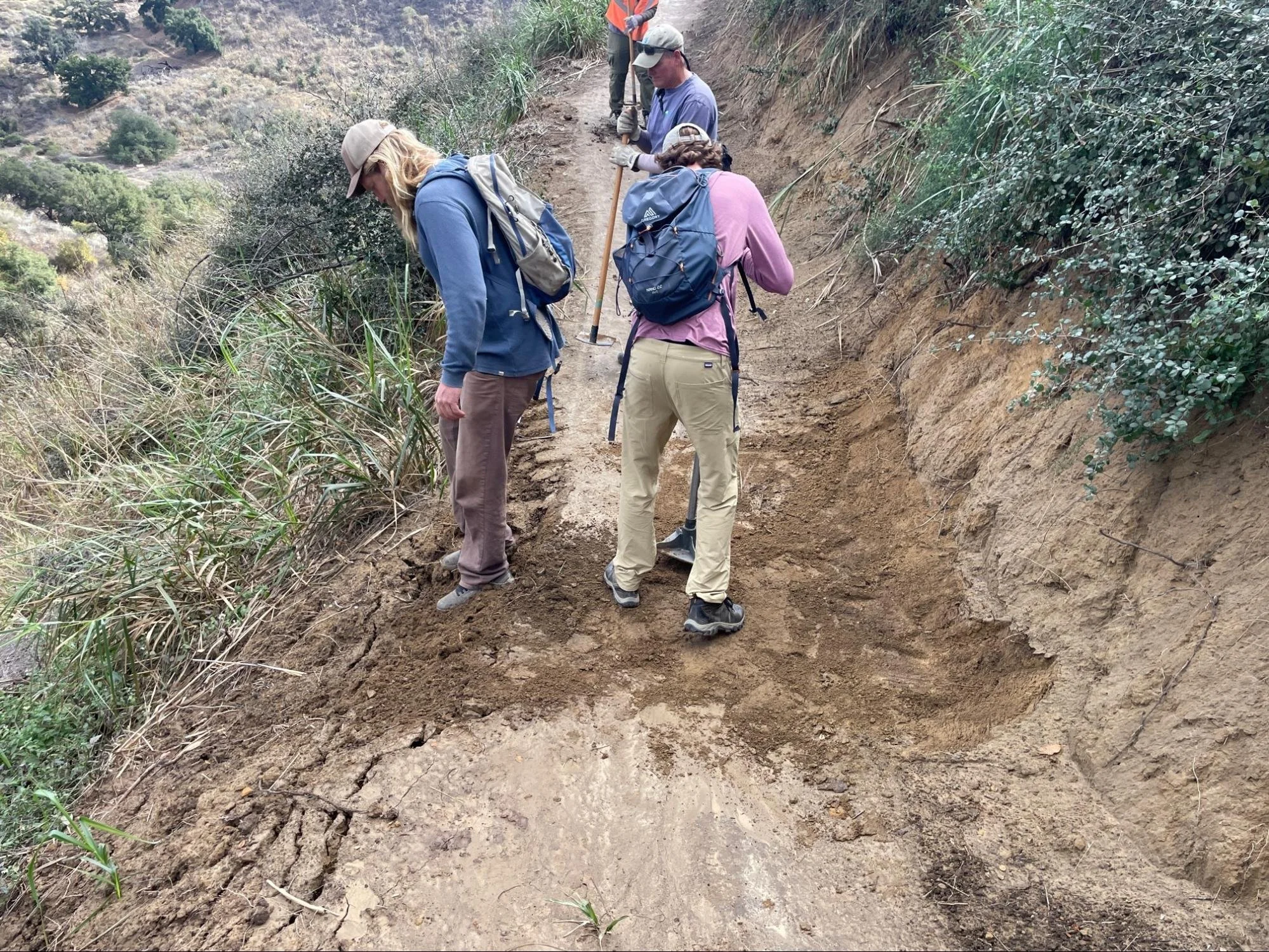
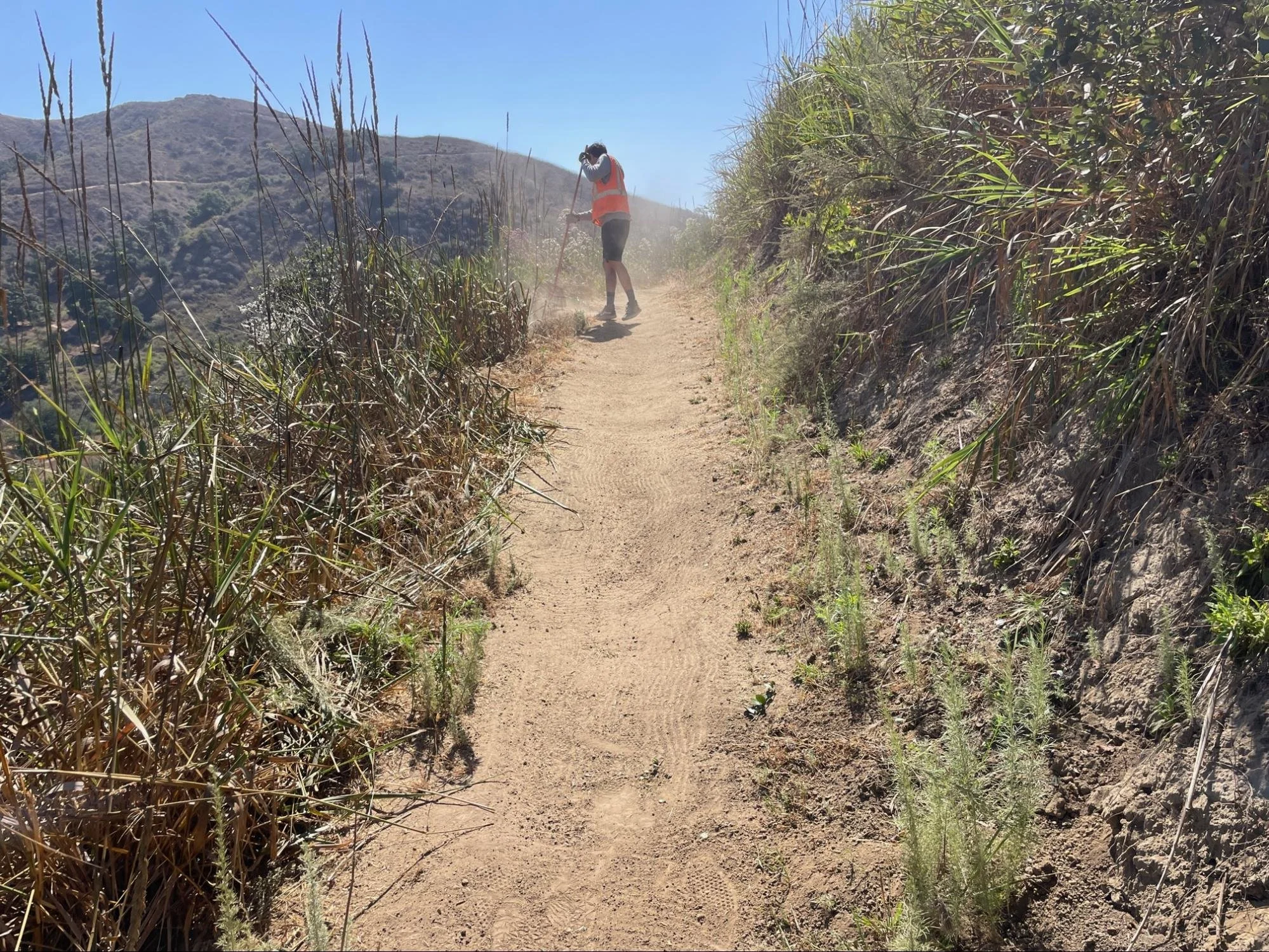
Another critical aspect of trail maintenance is properly managed trail tread and water mitigation features. To stop water from pooling on the trail and channelising down steep sections, we regularly install and clear water bars and drains. You can think of a water bar as a speed bump made of soil aimed at diverting water off the trail, and a drain as an area where that water can filter off. These features need continual maintenance as they fill with sediment and degrade over time. Through a series of volunteer events, VLT received over 100 hours of volunteer work fixing trail tread, building water bars, clearing drains, hand weeding, and clearing the trail after it had been trimmed.
This work would not have been possible if it were not for the funding provided by the Schwemm Family Foundation and the many volunteer hours utilised to aid in the process. If you, or someone you know, is interested in financially sponsoring a trail for maintenance, please reach out to quill.yates@venturalandtrust.org.