A Preserve Amidst the Pavement: Building Biodiversity at the VLT Welcome Center
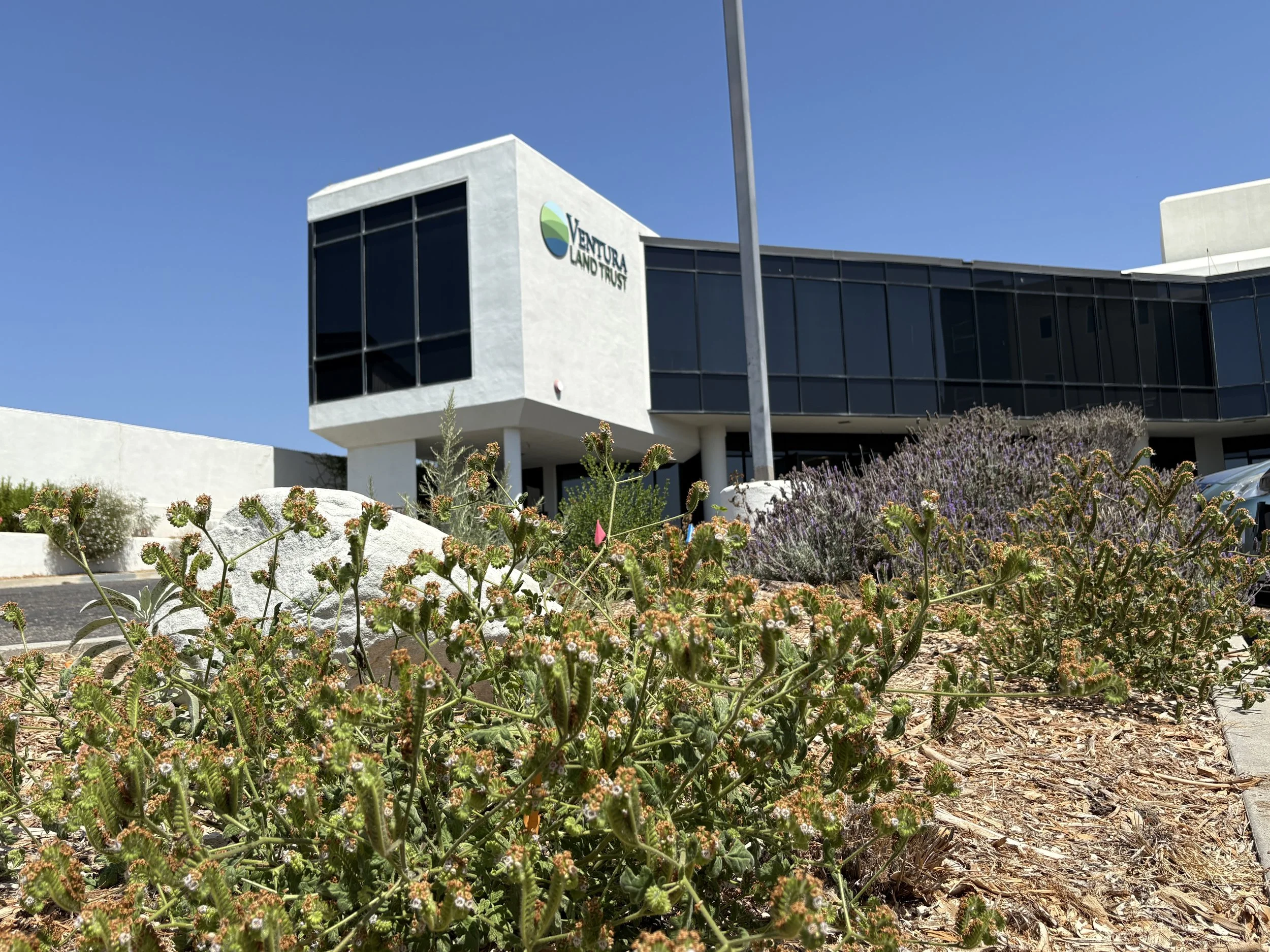
In April of last year, the Ventura Land Trust (VLT) team moved into their new building in Midtown Ventura. Since then, they have been hard at work making the house a home. From painting and furnishing to planning a first-floor renovation for the educational Welcome Center, VLT is excited to make the building a place for the community to gather – and this includes the outside of the building too!
When it was first acquired, the building’s landscaping mainly consisted of non-native ornamental plants, including fountain grass, pygmy date palms, daylilies, crape myrtle trees, and many others.
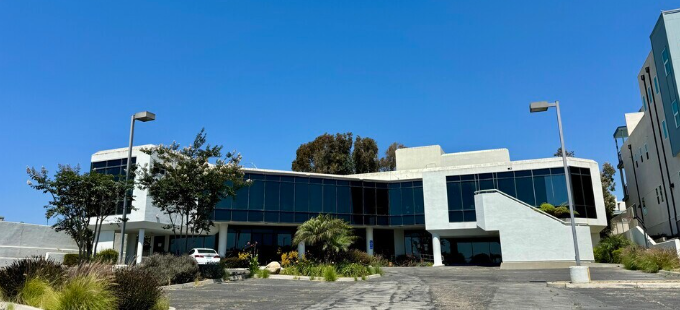
Traditional commercial landscaping choices like this prioritize conventional horticultural plants that create a pleasing aesthetic for office workers coming into work every day. For this reason, they are often low maintenance species that can tolerate environmental factors such as poor soils and the heat that emanates from asphalt and pavement. However, these non-natives do not support functioning local ecosystems, and can sometimes actively harm them. Fountain grass (Pennisetum setaceum), is an invasive plant in California. It spreads very easily, moving into areas where it’s unwanted – including Ventura’s natural areas and our VLT preserves. It’s highly flammable and builds up fuel loads in the hillsides and around houses. So, while the yard may have looked nice, VLT knew the space was destined for more.
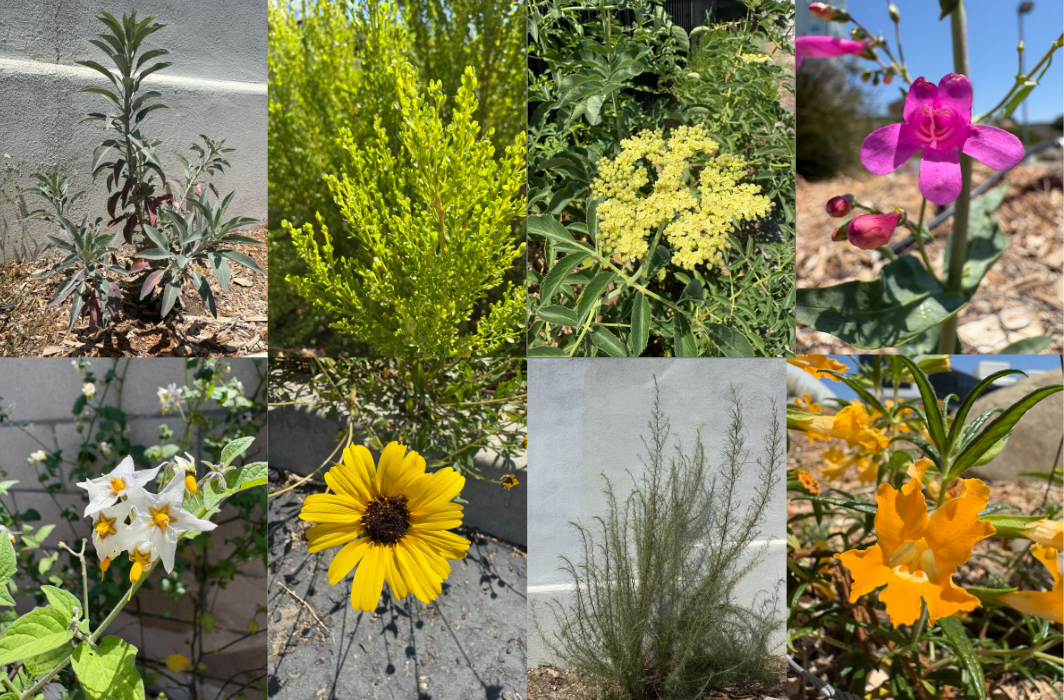
Since moving in, the team has removed these non-native and invasive plants and installed over 20 native species local to our area. With plants sourced from VLT preserves and plant donations from Santa Monica Mountains Fund and MiniNature Reserve, funding support from SoCalGas, and field efforts supported by numerous volunteer events including SoCalGas, Love Ventura, the California Climate Action Corps, and Ventura Rotary Club, the transition is well underway.
A few of these species include coastal prickly pear (Opuntia littoralis), cliff aster (Malacothrix saxatilis), coast live oak (Quercus agrifolia), monkey flower (Diplacus longiflorus), California brittlebush (Encelia californica), blue elderberry (Sambucus mexicanus), coyote brush (Baccharis pilularis), and California sagebrush (Artemisia californica). The team was also excited to find a few native species already growing, including willowherb (Epilobium ciliatum) and common nightshade (Solanum americanum). It just goes to show that the plants that have evolved here, and co-evolved with the soils and insects and birds, want to be here.
What the previous non-native landscaping plants lacked, these native plants will provide. And more! First, a thoughtfully designed native landscape can offer a succession of vibrant blooms year-round! As I’m writing this in the heat of mid-July, the cliff asters are in full bloom, attracting so many pollinators you can almost hear the buzzing as you walk by. The same can be said for the caterpillar phacelia (Phacelia cicutaria), another dependable summer bloomer in our coastal sage scrub ecosystem. These plants are two incredibly important food sources for pollinators in the hot summer months, and they look beautiful.
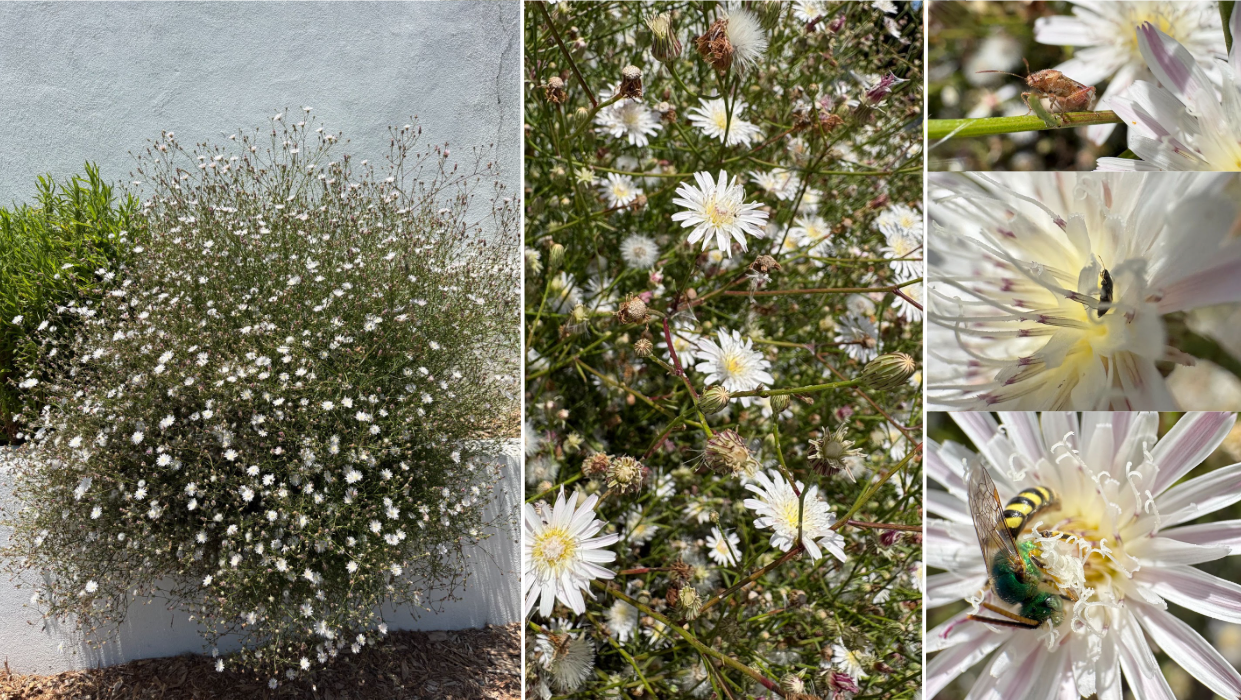
Establishing cliff aster (Malacothrix saxatilis) and some of its invertebrate community.
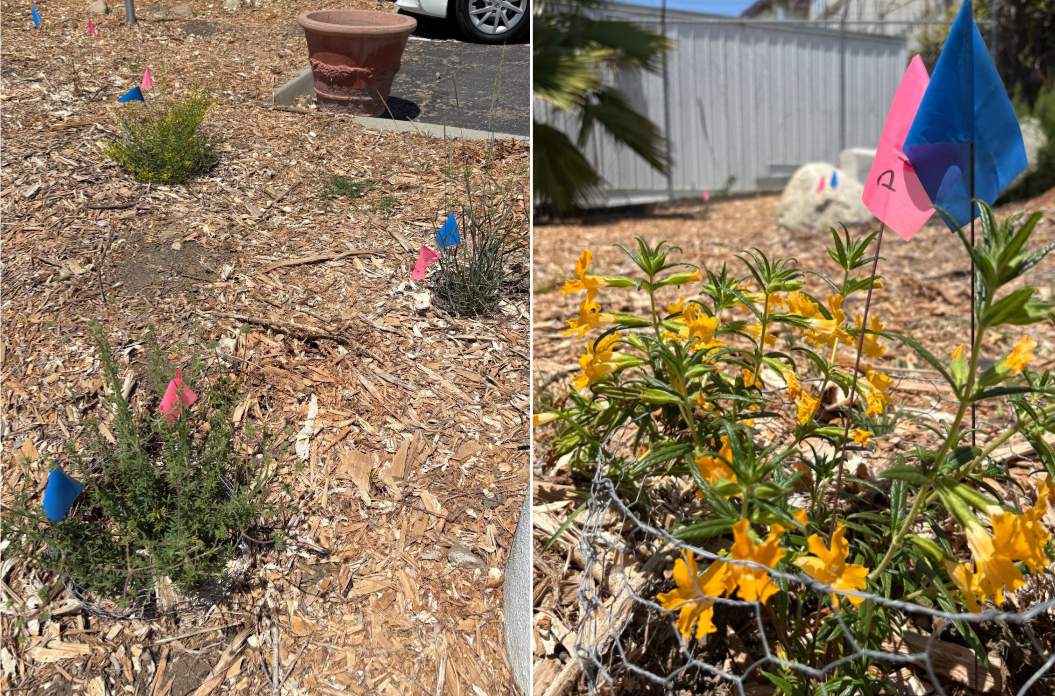
As for water-usage, plants native to Ventura’s hillsides are adapted to seasonal drought (typically May through October in our area), making them resilient plants and an excellent option for water conservation in landscaping. In general, native plants will require supplemental watering for a year or two to get established, especially during the hot summer months. At VLT, we’ve marked these younger plants with flags. Soon, our garden will survive and grow without needing much irrigation.
Finally, replacing the previous landscaping with native plants will serve more than just the human visitors. With these plants, the VLT Welcome Center environs will become habitat to support biodiversity in an urban landscape. Recently, I took a closer look around and found over 20 species of insects, spiders, lizards, mammals, and more living in VLT’s front yard! Here are some highlights:
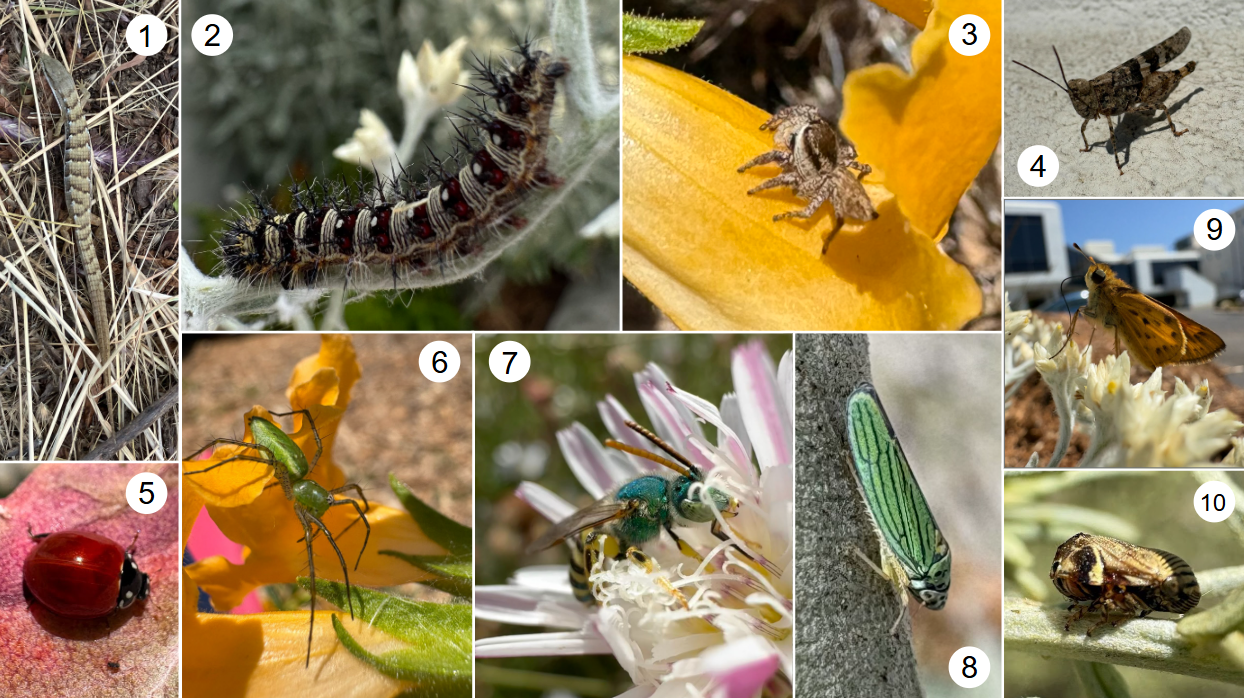
1. Southern alligator lizard (Elgaria multicarinata); 2. American lady (Vanessa virginiensis); 3. Paradise jumping spider (Genus Habronattus); 4. Pallid-winged grasshopper (Trimerotropis pallidipennis); 5. Spotless lady beetle (Cycloneda sanguinea); 6. Striped lynx spider (Oxyopes salticus); 7. Striped sweat bee (Subgenus Agapostemon); 8. Blue-green sharpshooter (Graphocephala atropunctata); 9. Fiery skipper (Hylephila phyleus); 10. Spittlebug (Genus Clastoptera)
Notably, this is only a subset of the biodiversity I’ve observed since coming to the VLT compound. I’ve seen: house finches, Say’s phoebes, Anna’s hummingbirds, California towhees, and nesting dark-eyed juncos; dragonflies and drifting monarch butterflies; western fence lizards basking in the sun; dashing brush rabbits, furtive Botta’s pocket gophers, elusive Beechy’s ground squirrels; and many other insects too fast or small for my iPhone camera to capture. Just like on VLT preserves, an iNaturalist project has been created (Ventura Land Trust Welcome Center) to help document this biodiversity, and anyone can contribute by posting observations. To date, twenty-eight observations have been made by eight observers, and it’s just the beginning!
Just as the Welcome Center will one day help people to learn more about the incredible biodiversity in our wildlands, the habitat around it is already welcoming local wildlife. In the future, we hope it will serve to educate visitors on the native plants they can expect to meet on VLT preserves, as well as provide habitat and food for native wildlife. I also hope that it will be an inspiring example of how even a small space, like a median in a parking lot, can be a way for us Venturans to support the native plants and wildlife we share our home with.
On that note, here are some resources I have found helpful when it comes to getting started with native plant gardens and landscaping. Remember, even just a small space can make a big difference. Join us!
California Native Plant Society: cnps.org
Calscape Native Garden Planner: calscape.org/garden-planner
The Santa Monica Mountains Fund Resources Page: samofund.org/bringing-native-plants-home
Bloom! California: bloomcalifornia.org
Audubon’s Native Plant Database: audubon.org/native-plants
PlantRight (don’t plant a pest!): plantright.org
California Invasive Plant Council: cal-ipc.org